
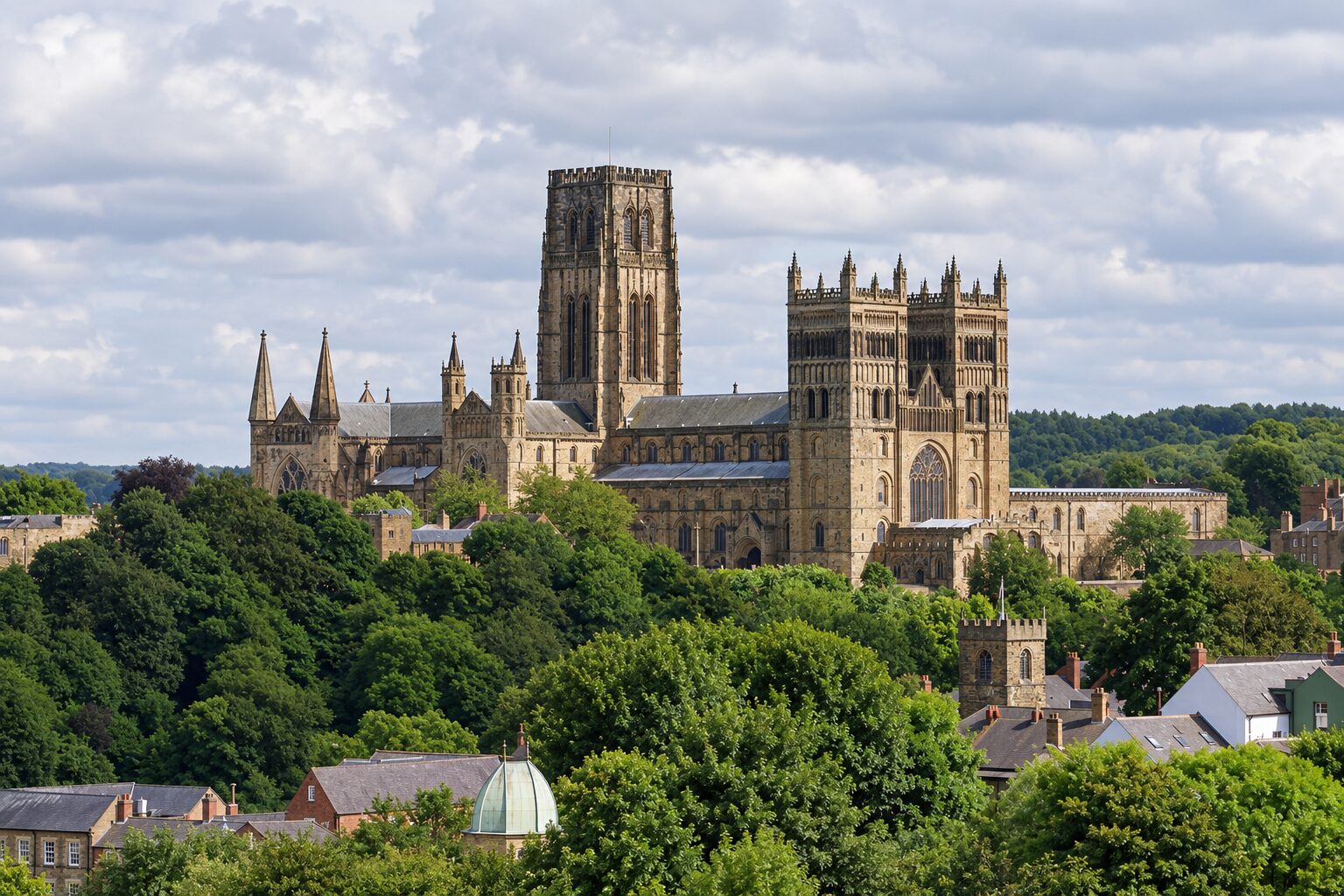
Set high on a rock in a loop of the River Wear, Durham Cathedral was built to house the shrine of St Cuthbert. It is the supreme achievement of Norman architecture in England and one of the great Romanesque churches of Europe.
Begun in 1093 by Benedictine monks, the cathedral was raised to enshrine the relics of St Cuthbert, carried from Lindisfarne generations before. The main structure was largely complete within forty years, by about 1133.
Its builders achieved something new: the massive drum piers, incised with chevrons and lozenges, carry the earliest large-scale pointed rib vaults in Europe, a structural leap that pointed the way to Gothic.
Durham also holds the tomb of the Venerable Bede, the father of English history, making the cathedral a resting place of two of the north's greatest saints and scholars.